
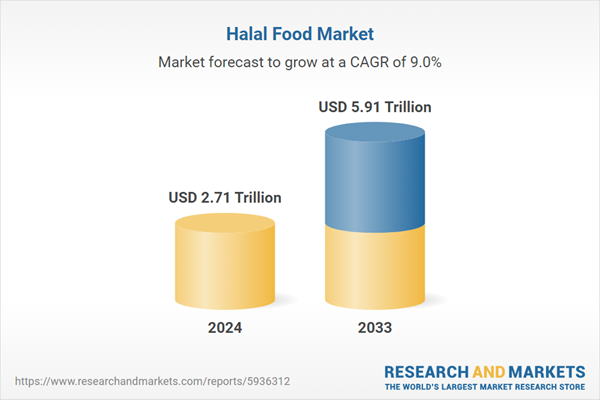
With the growth of Islam adherents and heightened awareness via increasing multiculturalism, the halal industry is expanding at a Compound Annual Growth Rate (CAGR) of 8.92% from 2025-2033. In fact, it’s expected to reach USD 5.91 trillion by 2033.
And when we say halal, don’t think just “food” and food products. The halal cosmetic, pharmaceutical, and packaging industries are also having a moment right now.
Canada in particular is experiencing a growth in its Muslim demographic, that’s why the Canadian halal market will exceed $4.39 Billion by 2029.
Read More: Islam in Canada: Growth and Projections
Here’s an overview explaining everything you need to know about how to get halal certification in Canada.
How to Get Halal certified in Canada
While processes may vary slightly between agencies, the general steps involve:
- Application and Documentation Submission:
- Businesses begin by applying to a chosen Halal certification body.
- This typically requires submitting detailed information about products, including a full ingredient list, product samples with retail labels, and how products are used.
- You’ll need to provide documentation such as business registration, ingredient supplier names/addresses, product specifications, existing Halal certifications for raw materials, Certificates of Analysis (CoAs), Safety Data Sheets (SDS), and manufacturing procedures.
- Many halal certification bodies, like the Canadian Halal Bureau (CHB), offer free initial product evaluation.
- Application Review and Evaluation:
- A technical expert or team reviews the submitted information to assess the product’s Halal eligibility and identify potential non-Halal elements.
- This stage may involve requests for additional documentation or clarification.
- Quotation and Agreement:
- Upon successful review, a quotation is sent based on the scope of work and fees.
- Clients are typically required to sign a certification agreement.
- Inspection and Verification (Audit):
- Certifying bodies conduct thorough on-site inspections of production facilities.
- This includes auditing ingredient sources, production methods, equipment, storage areas, and cross-contamination measures to ensure compliance with Halal standards.
- Sanitation protocols are crucial, ensuring equipment is free of non-Halal residues using non-Haram cleaning agents.
- Auditors will check for Halal Critical Control Points (HCCPs) to monitor risks related to intoxicants, animal derivatives, and microbial products.
- For meat and poultry, supervision of the slaughter process may be required.
- Certification Decision and Issuance:
- After the audit, a review is conducted, and a final decision is made by a Certification Committee.
- If approved, the official Halal certificate is issued. This is usually valid for a specific period.
- Certified companies are authorized to use the agency’s Halal logo on their products.
- Post-Certification & Renewal:
- Certification is usually valid for a specific period, after which companies must undergo renewal audits to maintain their Halal status.
- Ongoing compliance is essential, and agencies may conduct surveillance audits.
- Products can typically be added to the certification during the valid period by contacting the agency.
What exactly is “Halal”?
- What is Halal? The term “Halal” means “permissible” in Arabic and applies to a wide range of products allowed for consumption or use by Muslims. It’s not limited to meat but extends to pharmaceuticals, cosmetics, and processed foods.
- What is Haram (Forbidden)? The fundamental principle is often summarized as “Everything is halal except ABCD IS haram”:
- Alcohol (ethanol) and all intoxicants/drugs. Even beverages with as little as 1% ethanol are prohibited.
- Blood (fluid or coagulated).
- Carnivorous animals (excluding fish).
- Dead meat or meat not slaughtered according to Islamic rites. This is a critical point, as some certifications differentiate between machine and hand slaughter, with some scholars and consumers only accepting hand slaughter.
- Foods sacrificed to Idols.
- Swine (Pork) and all its derivatives.
The fifth point is key – food sacrificed to idols is not permissible; but on the flip side, halal food should be slaughtered using the Zabihah process.
This is where a sane adult muslim invokes the name of Allah as the animal is killed in one strike.
It’s key because discussions about whether or not meat slaughtered by machines is halal have been discussed across the internet. So you want to get certified by agencies like the Canadian Halal Bureau because their audit process covers all these and gives the consumer the assurance that your product followed all the permissible processes.
- Beyond Ingredients: Halal integrity must be preserved throughout the entire production process, preventing cross-contamination between Halal and non-Halal products. This includes raw materials, processing aids, additives, and manufacturing methods.
Read More: What Makes a Food Halal? A Technical Guide to Understanding Halal Foods
Key Considerations and Benefits
- Timeline: The process can vary based on complexity with respect to the certifying agency you’ve chosen to go with. The ideal choice for you would be the 48 hours offered by the Canadian Halal Bureau. 48 hours is ample time to ensure the audit is thorough but not too much in case you need urgency.
- Costs: Agencies charge fees for certification, and applicants are usually responsible for costs like product samples and shipping. Rejected applications often receive a full refund.
- Industry Scope: Halal certification is not limited to food. It’s crucial for pharmaceuticals (addressing gelatin/alcohol concerns), cosmetics (animal-derived ingredients, alcohol), personal care, clothing, textiles, and even travel/hospitality services.
- Market Expansion: Halal certification is a “ticket to the global Halal market,” valued at trillions of dollars. It significantly boosts export potential, revenue streams, and market share, often without losing non-Muslim consumers. Therefore, applying with an internationally recognized agency is key. CHB offers halal certificates that are recognized in every importing region around the globe.
- Consumer Trust: Certification builds trust and brand loyalty among Muslim consumers by assuring adherence to Islamic laws and often appeals to non-Muslims looking for ethical or quality assurances.
- Challenges and Solutions: Companies may face challenges with ingredient compliance, cross-contamination, and supply chain transparency. Solutions include thorough ingredient analysis, dedicated production lines, supply chain audits, and close collaboration with certifying bodies.
- Future Trends: The Halal market is experiencing significant growth driven by increasing Muslim populations and rising awareness among non-Muslims.
Read More: Halal Market Statistics: Food, Cosmetics, Pharmaceuticals, Supplements, Packaging & More