
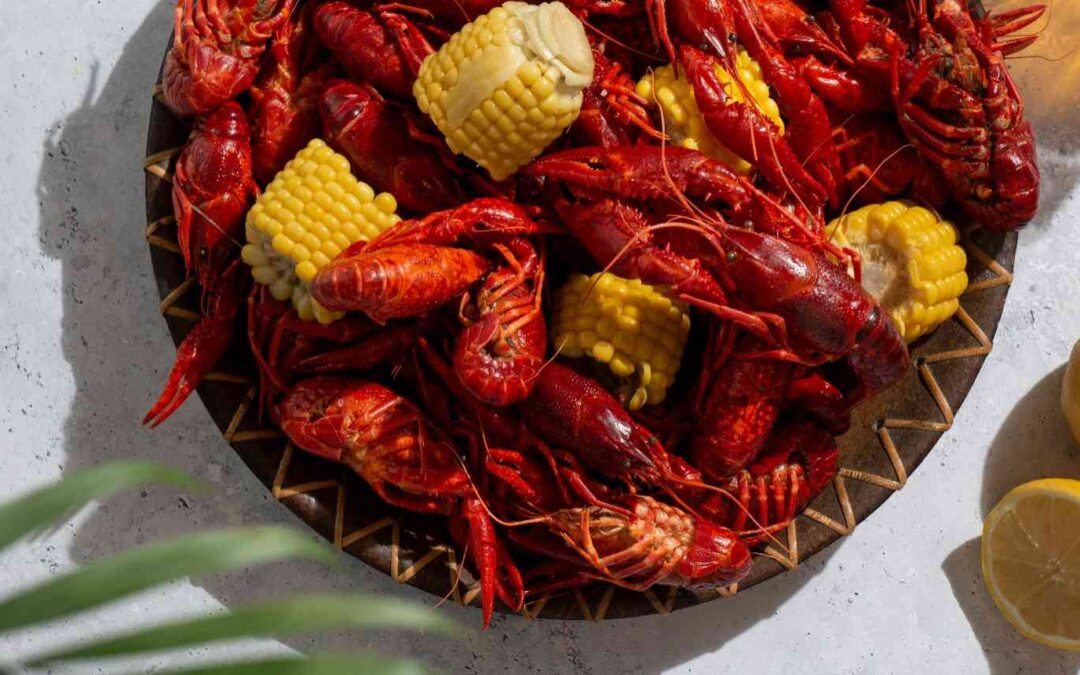
Is lobster halal? In this guide, the Canada Halal Bureau (CHB) experts clarify the issue.
| The Short Answer: It depends on the different schools of Islamic Jurisprudence |
The permissibility of lobster largely depends on whether it is considered halal in the Islamic jurisprudence the consumer follows.
According to the Shafi’i, Maliki, and Hanbali schools, lobster is halal. The Hanafi school considers lobster tahrim (prohibitively unwelcome) or non-halal, because it is not classified as “fish.”
What Does The Quran Say About The Purity of Lobsters?
Islamic dietary laws are fundamental to the daily life of a Muslim, serving as a spiritual filter for the things that enter your body. For most scholars, the starting point for any discussion of seafood is Surah Al-Ma’idah (5:96):
“It is lawful for you to hunt and eat seafood, as a provision for you and for travellers…”
Furthermore, a famous hadith of the Prophet (peace and blessings be upon him) describes the sea by saying: “Its water is pure and its dead are lawful” (Sunan al-Nasa’i).
Based on these texts, the general consensus in Islamic law is that the sea is a source of purity and all the creatures that dwell in it are inherently halal. However, the main hitch in the lobster debate arises when Islamic scholars try to define what exactly constitutes “water game” or “fish.”
The Shafi’i, Hanbali, and Maliki View of Lobsters
For the followers of Imam Ash-Shafi’i, Imam Ahmad bin Hanbal, and Imam Malik, the rule is refreshingly simple: if it lives in water, it is permissible to eat it.
These schools interpret the Quranic expression “water game” (sayd al-bahr) literally. They do not distinguish between a finned and scaled creature (like a salmon) and a crustacean (like a lobster or crab).
What Do We Understand from this Perspective?
- Lobsters are creatures of the sea.
- The sea is pure.
- Lobster is halal and does not require any ritual slaughter.
As a Muslim in Canada following these schools, ordering a lobster roll is perfectly permissible, as long as it does not include non-halal ingredients like alcohol-based sauces.
The Hanafi View
The Hanafi Madhab, popular in Türkiye and amongst South and Central Asians, holds a more restrictive view. According to Hanafi scholars, while the Quran permits water game, the Sunnah and linguistic traditions of the time were only specific about Samak (fish) being permitted from water.
Everything else, aquatic mammals, crustaceans such as lobsters, and mollusks such as clams, are classified as khaba’ith (unclean or repugnant) as they don’t fit the definition of “fish.” Its lack of skeletal structure and characteristics of a fish is why the Hanafi school generally considers it inadmissible.
Practical Considerations for Muslim Consumers of Lobsters
When eating at major Canadian seafood chains like Red Lobster or at your local bistro, it is crucial that you carry out cross-contamination. Below are a few things to look out for:
- Alcohol in Sauces: Many lobster dishes are served with butter sauces that contain white wine or sherry.
- Shared Equipment: Is the lobster steamed in the same pot as non-halal meats or products prepared with lard?
- The Live Tank: One of the advantages of buying lobster in Canada is the use of live tanks. As a Muslim consumer, this allows you to see if the lobster is handled and killed according to your ethical and religious standards.
Summary
Whether one considers the lobster a pure gift from the sea or a creature to be avoided depends on the Islamic tradition that guides one.
If you follow the Hanafi or Ja’fari schools, the path is clear: lobster is off the menu. If you follow the Shafi’i, Maliki, or Hanbali schools, lobster is permitted.
At CHB, our mission is to provide you with the clarity you need to confidently navigate the Canadian market. Have more questions about seafood or halal certification in Canada? Contact our team at info@halalbureau.ca or browse our list of certified establishments.
FAQs
Q. Is the lobster served in mainstream restaurants like Red Lobster halal?
A. Generally, no. Even if you follow a school that considers lobster halal, these restaurants often use white wine in their sauces and cook the lobster in the same equipment as non-halal items.
Q. If a seafood dish is certified halal, what does it guarantee?
A. A halal certification logo on a seafood menu or packaging means that an independent authority like CHB has verified the entire supply chain.
Q. Can I eat at a Seafood Only restaurant without a Halal certificate?
A. This requires discretion. You’ll have to personally verify that your meal has not come into contact with alcohol or contaminated equipment.